Author:Almira Tanner
Published on:February 11, 2021
😱 The rule of 3.5% has been broken. What does this mean for DxE?
I snapped out of my daydream and became very focused on the podcast playing from my phone. I had been absent-mindedly listening to an article about how to stop a coup (as one does these days), when all of a sudden I heard the speaker, Erica Chenoweth, state that the 3.5% rule had been broken.

If you’ve been in the DxE universe for more than a few months, this name and this percentage is probably not new to you. Erica Chenoweth is a political scientist who, along with Maria Stephan, wrote Why Civil Resistance Works, and delivered a popular TedTalk on the impact of nonviolent action. Their conclusion, taken from studying over 300 movements from the past 100 years, is that nonviolent movements are twice as likely to succeed as violent movements, and that mass mobilization is critical to movement success, such that no movement that mobilized 3.5% of the population has ever failed. This is essentially DxE dogma, as it is in much of the rest of the social movement world from Extinction Rebellion to the Sunrise Movement.
For a while, I’d been feeling uncomfortable drawing such strong conclusions from Chenoweth’s research considering the movements studied by Chenoweth are significantly different than the animal rights movement. The data set from which all these statistics come is limited to “maximalist” campaigns - those that set out to overthrow dictators or achieve territorial independence - because these campaigns are much easier to code as successes or failures. In this sense, animal rights is more a reformist movement, such as civil rights or women’s suffrage. Movements such as these were deliberately excluded from analysis by Chenoweth.
So hearing then that even this relatively narrow rule had been broken gave me the impetus to read a bit further and write this short update. Does this completely change DxE’s theory of change? Not at all. Mobilizing ordinary people in nonviolent direct action still remains the most effective way to create social change. But in the spirit of “doing our homework” and ensuring we’re always disseminating the most accurate information possible, here are three key points of clarification I’d like to share.
- The rule has been broken, at least twice.
Chenoweth has identified two cases where maximalist campaigns failed despite mobilizing more than 3.5% of the population: Brunei in 1962 (4% mobilized) and Bahrain in 2011-2014 (6% mobilized). Both of these cases involve short-lived mobilizations against a monarch with heavy foreign support in a country with a very small population. While these are just two cases out of the ~350 studied (of which 150 were considered successful), it’s important to know that the 3.5% rule can and has been broken.
Furthermore, Chenoweth argues that maximalist campaigns are becoming less effective and successful in general (though nonviolent campaigns are still more effective than violent ones). They hypothesize that this could be because of increases in state surveillance and repression and because the internet is allowing rapid mobilization without the hard work of organizing. It’s a lot easier to get 100,000 people in the streets now than it was 50 years ago, but the shortcuts mean organizers are no longer having to put in the ground work to develop strategy, capacity, and resilience. Those 100,000 people might just show up once because they saw it on Facebook and then go home.
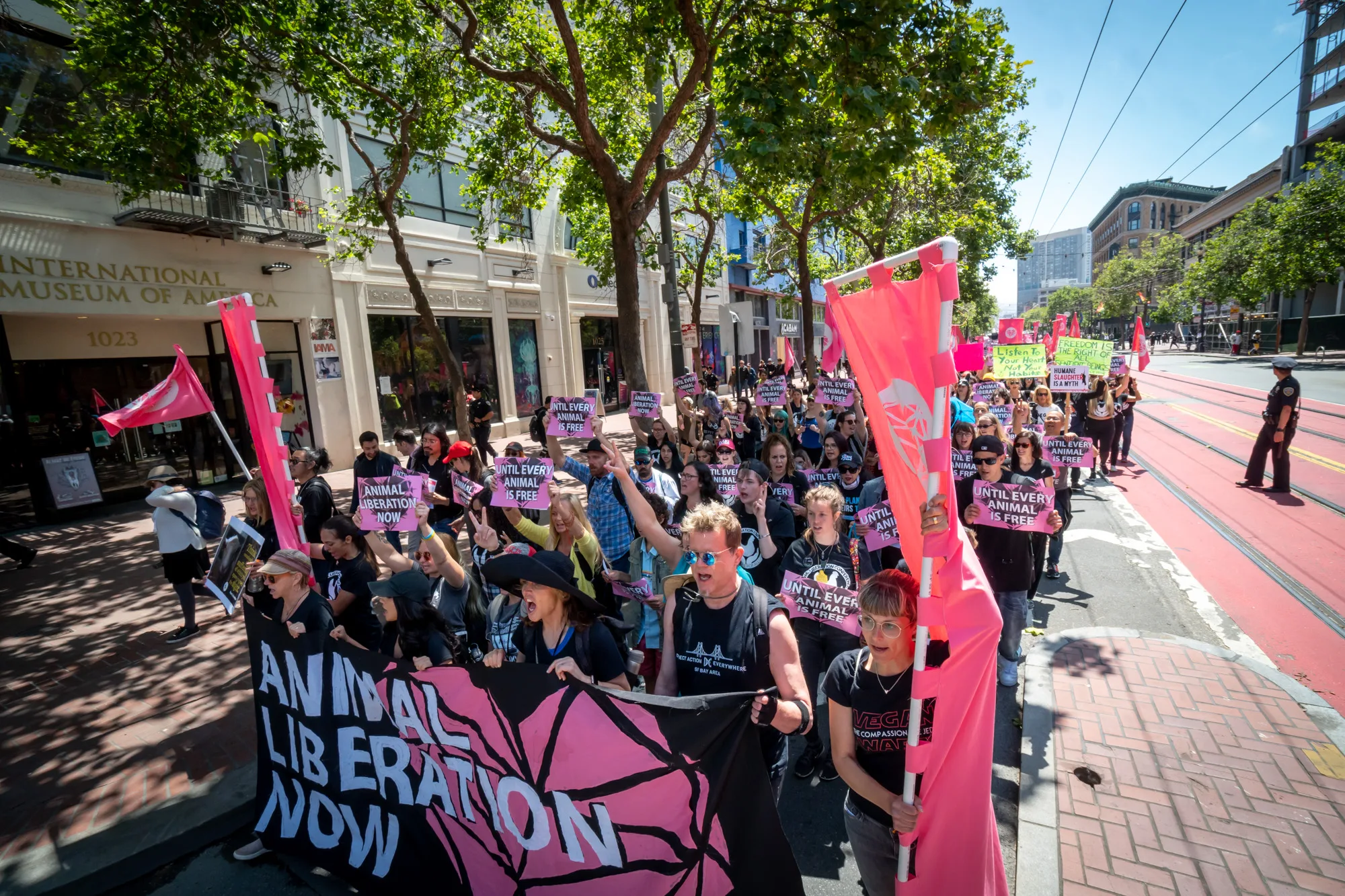
What does this mean for DxE? First, we need to acknowledge the limitations in translating this “rule” to our movement. I think it’s fair to say that masses of ordinary people taking action is a dominant mechanism of change, and that we need much less than 50% of the population in order to enact change, but we should avoid so confidently declaring that if we hit 3.5% we will win. Second, we cannot abandon in-person (or Zoom for now) organizing for the quick fix of mobilizing people through the internet. Developing our strategic and organizing capacity is critical. And third, part of our strategy should always include methods to make state and corporate repression and surveillance backfire.
- The 3.5% figure refers to peak mobilization.
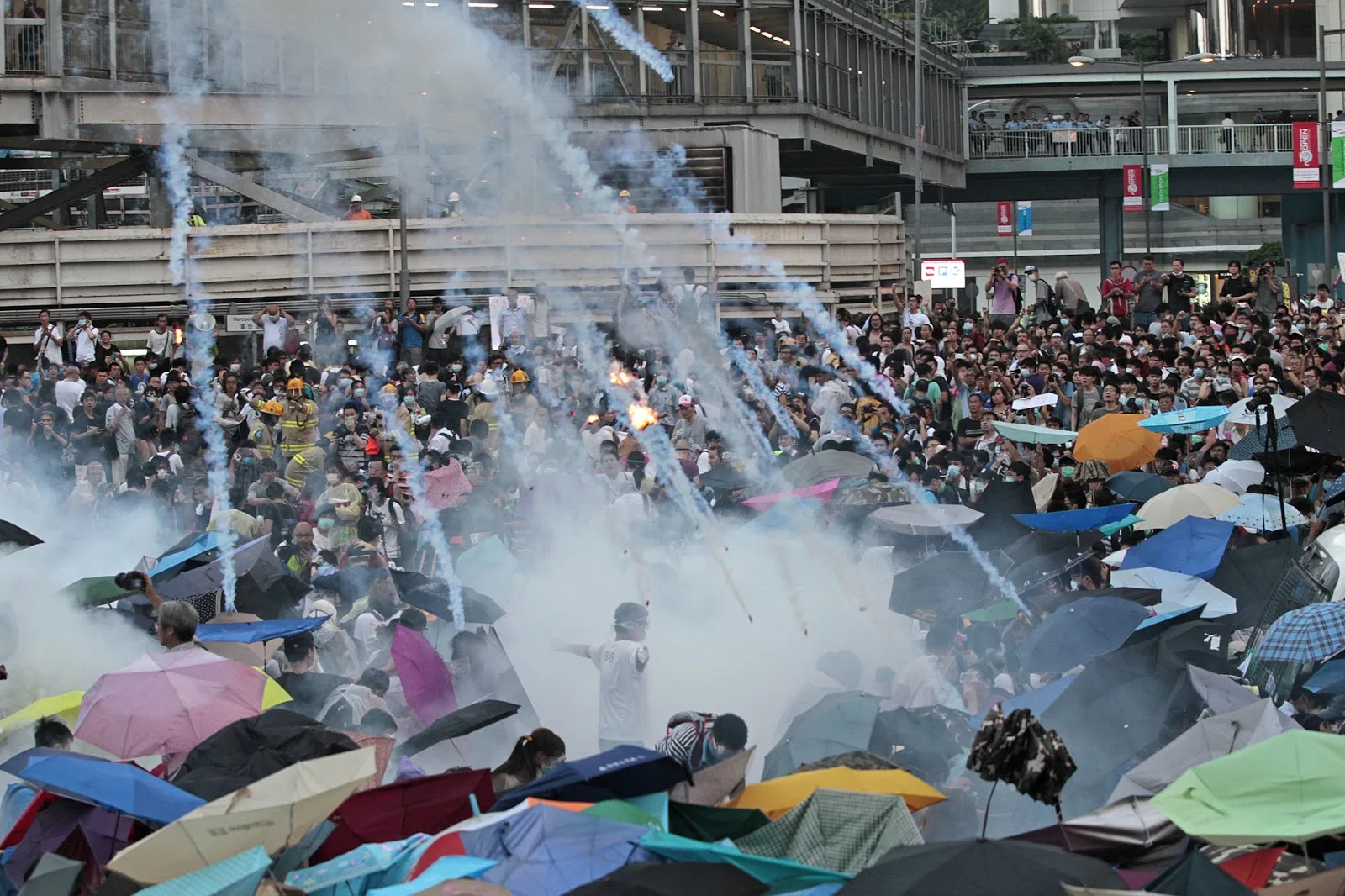
As it turns out, the numbers used to calculate the 3.5% figure are actually a count of peak mobilization. It was calculated by simply taking peak observed participation and dividing it by the country’s population. I’m not honestly sure why Chenoweth says it’s “sustained mobilization” in their TedTalk, which is why we’ve always indicated it to be a measure of sustained participation, but if I ever have the opportunity to speak with Chenoweth in the future, I will certainly ask.
That being said, sustained participation actually really does matter. Chenoweth stresses that other factors such as organization and strategic leadership are equally important, and that developing momentum (participation multiplied by number of protest events in a week) may also be a critical factor for success. By no means should we abandon our efforts of sustaining regular participation, but we should be accurate when we explain what the 3.5% figure means. I also think it would be wise to set a goal for peak mobilization and track our ability to get large numbers out on the streets on a less frequent basis.
- We can’t ignore public support.
3.5% of the US population is over 11 million people. Estimates from the #BlackLivesMatter protests following the murder of George Floyd are that between 15-26 million people participated at some point during the summer. Now, imagine all those people participating in the same day or even week. That’s a mindblowing number of people. That would be what Chenoweth calculates as about 6% of the population.
Chenoweth argues that it’s highly unlikely a movement could mobilize that number of people without greater amounts of passive public support. Polling shows that a slight majority of US Americans support #BlackLivesMatter, with a peak of 67% support in June during the height of the protests. 67% support, yet about 6% out in the streets. Regardless of the issue, the reality is that most people aren’t “protestors.” So if you want to get anywhere near mobilizing the masses, you need a much larger underlying base of public support. We don’t need a majority and we don’t need to wait for public support to take action (protesting can lead to increases in public support), but we can’t ignore the broader public either. Measuring passive support is harder, especially in retrospect, which is why Chenoweth and Stephan used the much easier and simpler “peak mobilization” figure.
In our organizing efforts, we need to keep our finger on the pulse of the broader public and ensure our messaging and campaigns are conducive to increasing public support while not abandoning our mission and our values. We could also explore ways to accurately measure if our movement is gaining more passive popular support. And probably most important of all, we can’t delude ourselves into thinking we can just “game” the system. We can’t just say “f*ck it” to 96.5% of the population and search for the key 3.5% of us who will take action. Because not only is this almost certainly a losing effort, it would likely negate the “rule” (once again). Chenoweth cautions that “organizing only to achieve mass participation benchmarks may create a loud but wildly unpopular minority, with little chance of achieving a sustainable victory.” The organizers in the movements studied by Chenoweth didn’t know about this rule; they authentically mobilized ordinary people to take action from a broader base of public support. If they had known about the rule and focused simply on meeting that threshold, they may have never succeeded.
In conclusion, I think it’s important to note some of the limitations about Chenoweth’s work and ensure we’re accurately conveying their research when we talk or write about social change. Chenoweth implores us to see the statistic as descriptive, not prescriptive, and as a general rule of thumb, not an infallible law. That being said, it’s still a pretty good rule of thumb and doesn’t change too much of our strategy. I’m still convinced that mobilizing ordinary people in nonviolent direct action is our best shot at changing the world. Maybe it’s 0.05% or 2% or 6%, but it doesn’t need to be anywhere near a majority. And the underlying factors of organization, strategic capacity, sustainability, ability to withstand repression, and public support cannot be ignored. I truly believe the animal rights movement can be another data point in the list of successful movements and I hope you will join us in making that happen!
Key References:
Why Civil Resistance Works by Erica Chenoweth and Maria Stephan
Questions, Answers, and Some Cautionary Updates Regarding the 3.5% Rule
The success of nonviolent civil resistance (TEDTalk)
Annals of Activism: How to Stop a Power Grab (The New Yorker)