How Pepper Spray Can Save Puppies
Open rescue as a strategy is not just about getting a few animals out of their cages, it is also about creating a crisis that can no longer be ignored. It is about forcing the public and people in power to choose a side.
In the morning hours of April 18th, we saw a dark side of humanity. We saw law enforcement officers commit horrific acts of violence against our friends as they tried to provide aid to some of the most vulnerable among us. We saw our government use war tactics to defend Ridglan Farms, a company that is caging and torturing thousands of puppies, who, without rescue, will never know kindness, freedom, or even the feel of sun on their skin.
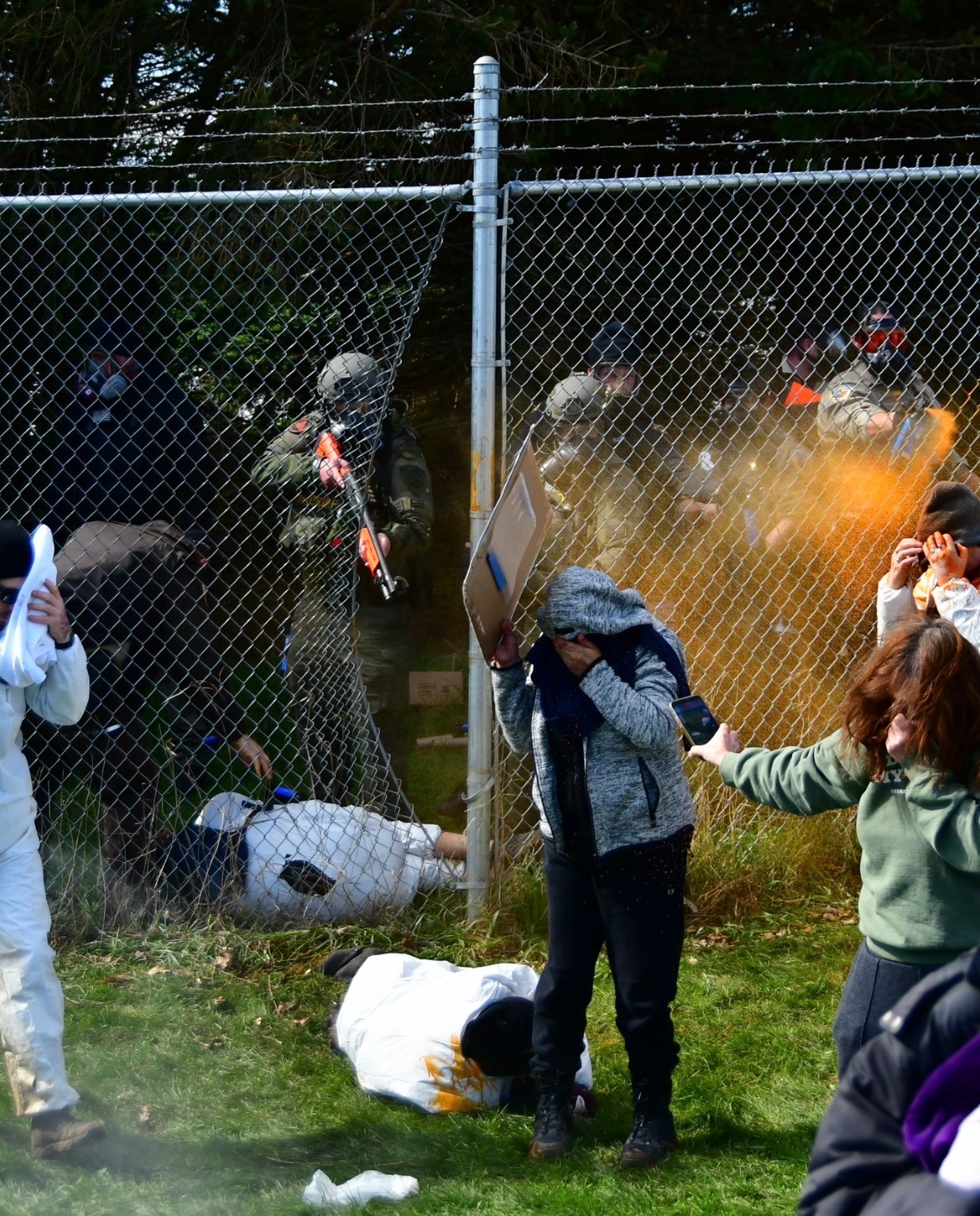
That said, I have never been filled with more hope than I am right now. In the aftermath of this attack on our activists, I saw people step up in ways I’ve never seen people step up before. People showed up to take care of each other, to sit for hours with one another in the emergency room, to wash chemicals out of each other’s eyes, and, most importantly, to continue to rally to save the dogs.
I know that everyone who was present this past weekend will carry physical and mental scars for a very long time. But, I do not want anyone to believe for even a moment that those scars are for nothing.
From where we stand today, we can't clearly see what events this brutality will or will not trigger. We can, however, look back to movements of the past and we can learn from the sociologists who have studied them.
Social movements expert and sociologist Doug McAdam has proposed that visible forms of repression are more likely to backfire on the repressor and inspire outrage and action. For example, in the Civil Rights Movement, when law enforcement beat nonviolent activists in the streets on live television, it led to increased public support and movement growth. When people were “gently” arrested and hauled off to jail, it did not have the same effect. Mobilization would decline when segregationists would become strategic and thoughtful about their reactions.
At UC Berkeley, I have designed my own major in social change strategy. A couple years ago, Professor Saru Jayaraman, president of One Fair Wage, explained nonviolent direct action in a way I’d never heard it explained before. She said that the purpose of nonviolent direct action is to create violence. And by that, she doesn’t mean that the goal of a protest is to have the victims of the issue being protested face more harm. She means that the violence is happening, it's happening every second of every day, but for the most part it is happening in a way where it is hidden. So, let’s bring it out into the open. Let us show the world what the oppressors are doing, what happens when peaceful individuals simply try to free tortured puppies from their cages.
As an example, we can look at the Selma marches during the Civil Rights Movement. Civil rights activists in Selma, Alabama attempted to march to Montgomery to register to vote at the state capitol. Instead, they were massacred by police in what became known as “Bloody Sunday.” These nonviolent activists were beaten, pepper sprayed, and severely injured.
One thing a lot of people don’t know is that Martin Luther King Jr. actually chose Selma as a place to march because he knew the sheriff in that county tended to be violent towards protestors and he wanted the world to see exactly what happened when black people tried to vote.
These marches had a crucially positive impact on civil rights. Black people were beaten on live television for doing nothing wrong. Suddenly, people who previously didn’t care much about civil rights were moved to not only care, but to fly all the way to Selma to join the marches. Many government officials were compelled to side with the activists, too. These actions are largely credited with initiating the introduction of Senate Bill 1964, a voting rights bill.
So how do we maximize our chances that April 18th’s events trigger greater impacts?
Well, McAdam proposes that a central problem of insurgency is “whether favorable shifts in political opportunities will be defined as such by a large enough group of people to facilitate collective protest.” Luckily, we somewhat have control over how we view a situation and if we view repression as an opportunity, as a signal to act and mobilize en masse, then we can help make it backfire. We need to create a culture within the animal rights movement of viewing repression in this way.
We also must keep making Saturday’s events as visible as we can. We must make sure as many people as possible see what the government did to keep scared, innocent beagle puppies in their cages. We must make them see how they sprayed chemicals in rescuers’ eyes, just as the laboratories do to the dogs at Ridglan.
Now, I want to be clear that I am not trying to brush over the most significant tragedy of that day. I know that the greatest heartbreak we are all experiencing is rooted in the knowledge that not a single dog was rescued. This is not an easy fact to face.
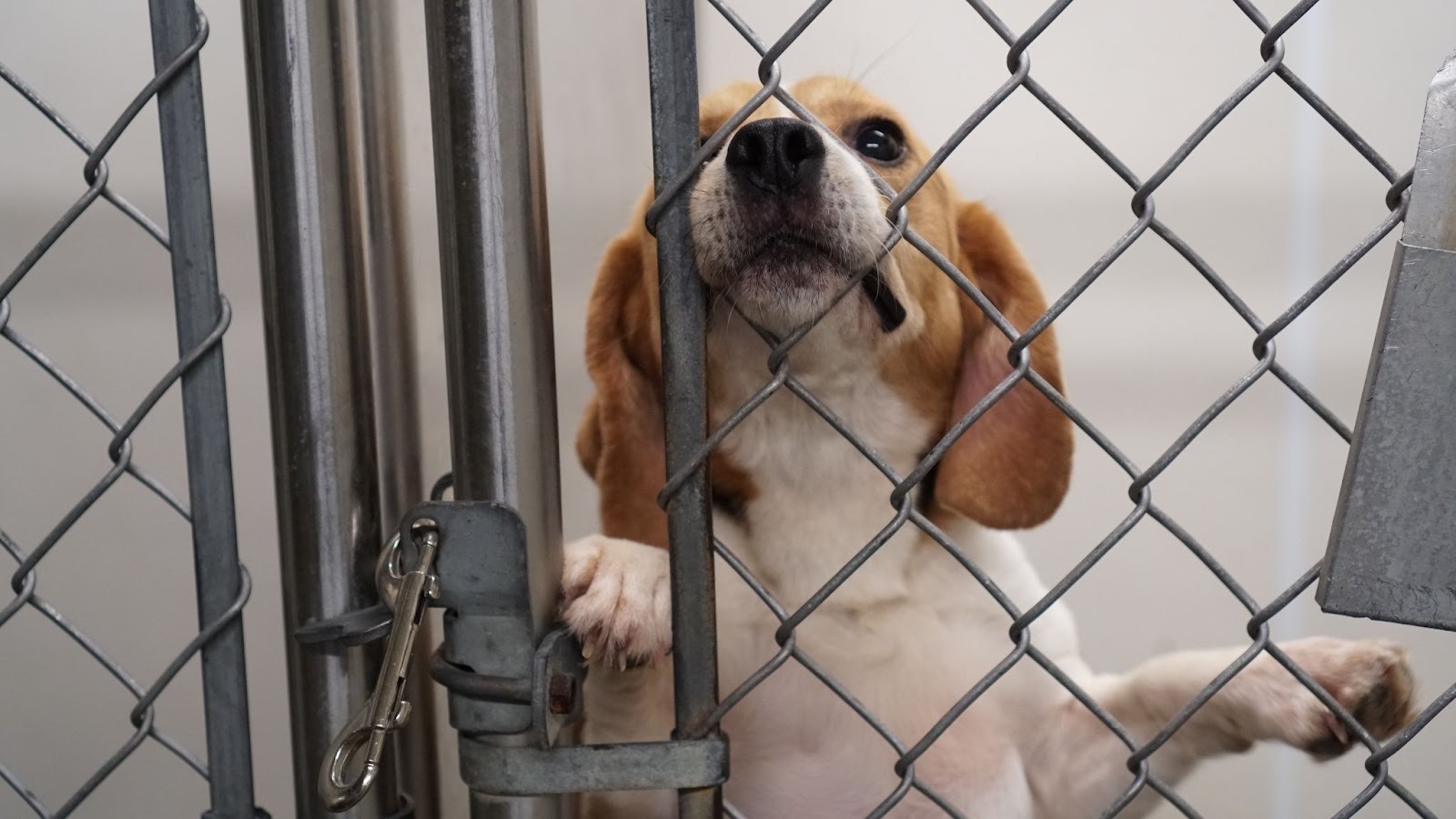
This morning, as the sun rose on Ridglan Farms, 2,000 dogs remained caged within. As millions of dogs woke in soft beds with toys and blankets, the puppies at Ridglan instead felt cold wire digging into their skin. The suffering that they are experiencing every moment of every day is unfathomable.
But, as the sun rose on Ridglan this morning, there was one major difference from most of the thousands of mornings before it. This morning, the cries of those dogs did not go unheard. They are no longer suffering in secret. That is the power of open rescue - even when it fails to directly save lives.
Open rescue as a strategy is not just about getting a few animals out of their cages, it is also about creating a crisis that can no longer be ignored. It is about forcing the public and people in power to choose a side. Do you want to defend animal abusers brutalizing peaceful rescuers or puppies longing for freedom? This morning, as our government officials sit down to address the piles of papers laying on their desks, this is one of the questions that they now must answer.
So far, Senator Jodi Habush Sinykin, State Representative Alex Joers, and Congressman Mark Pocan have all already picked a side and, spoiler alert, they sided with the dogs. I suspect others will join them in the coming hours and days.
In the meantime, don’t give up hope. More than anything, the agents of violence and corruption want us to feel powerless. They want us to focus on our failures and not on our ability to continue to create change. In this moment, it is more important than ever to continue taking action.
Get rested, recover from Saturday’s wounds and get ready. The fight doesn’t end here. The fight doesn’t end until every animal is free.