
If Rescuing a Suffering Animal Is a Crime, What Does That Make the System?
The prosecutorial viewpoint seems to be at odds with a growing public expectation that animals raised for food should not be left to suffer — and aggressive marketing (in this case, “humanewashing”) often deceives consumers into thinking they’re making the right purchasing choices.
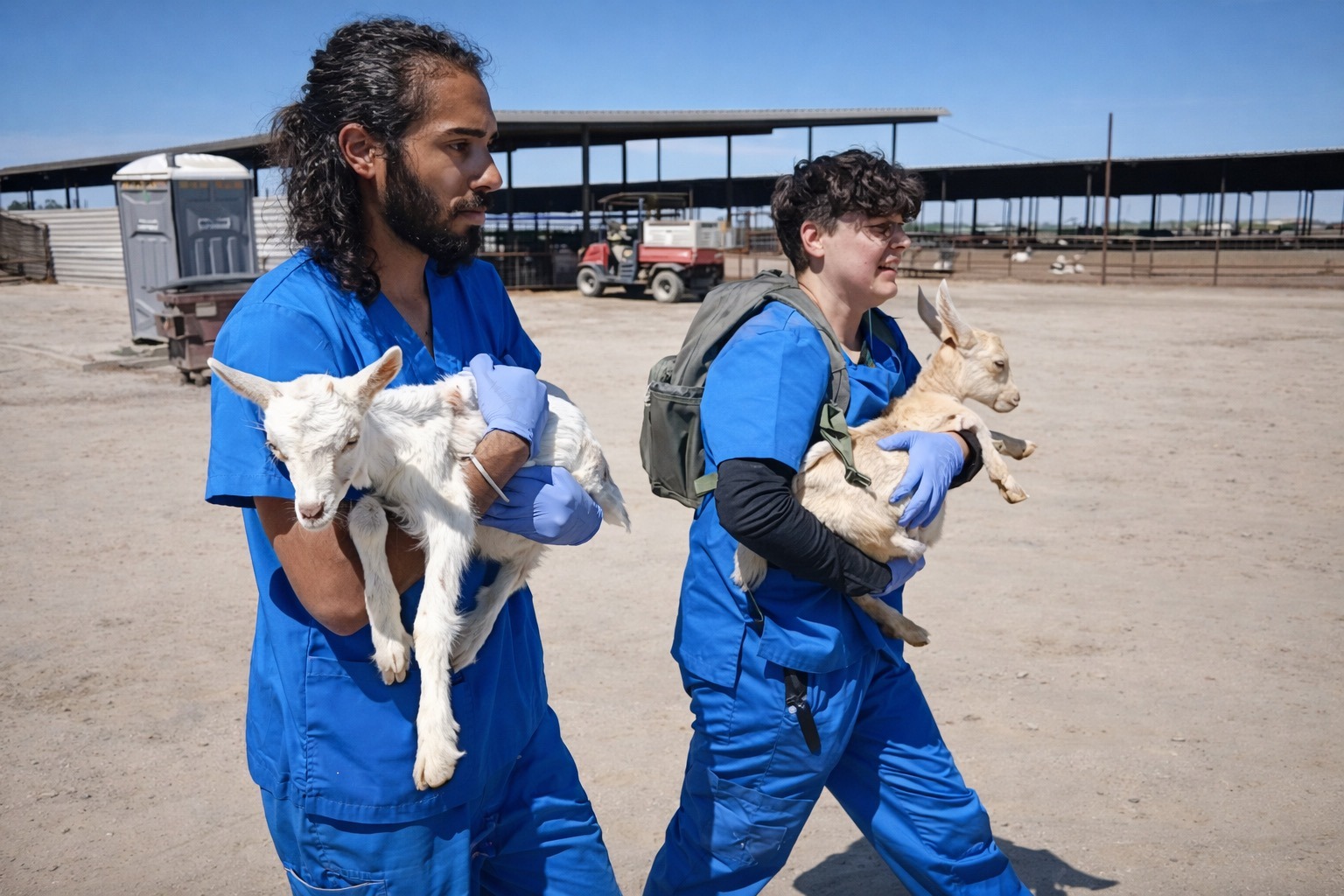
They stepped into the dairy in broad daylight. They didn’t conceal their identities. They wore bio-secure attire. They removed two distressed baby goats to take them to the vet. Then they got arrested.
Now, four Direct Action Everywhere animal rights activists face criminal charges.
In 2025, these investigators performed a form of nonviolent direct action called “open rescue,” and the idea is simple: If you see an animal in distress, you rescue them. It’s much like breaking into someone’s overheating car to save a dog trapped inside, and it’s all grounded in transparency and compassion.
But an open rescue is often a last resort when authorities fail to act. Activists investigate a factory farm and then (usually repeatedly) use proper channels to report animal welfare violations — frequently breaches of California Penal Code 597 — and the result is often government negligence.
This form of peaceful civil disobedience happens because of the belief that this moral instinct doesn’t stop at dogs imprisoned in hot cars — but prosecutors see it differently. They think it stops at barn doors.
The sad reality is that farmed animals are legally considered property, and their extraction without permission, even to get them medical care, can be charged as theft or trespass.
The prosecutorial viewpoint seems to be at odds with a growing public expectation that animals raised for food should not be left to suffer — and aggressive marketing (in this case, “humanewashing”) often deceives consumers into thinking they’re making the right purchasing choices.
Walk into an Erewhon Market, the upscale grocery chain and celebrity and influencer hotspot that claims on its website to source food ethically and to care about animal welfare. You’ll find neatly packaged animal products presented as humane, sustainable, and worthy of the company’s premium price tags.
Until last month, that included Meyenberg Goat Milk, which comes from the very dairy that these activists found to be breaking the law (including being cited in 2021 by the Central Valley Regional Water Quality Control Board for keeping piles of dead goats). Fortunately, after activists spent months campaigning to get Erewhon to drop Meyenberg Goat Milk, the retailer finally announced it will no longer sell it.
Why did activists have to reveal the lies in Erewhon’s marketing?
Erewhon makes (and breaks) promises that it’s worth it to pay top dollar for alleged animal well-being. But DxE investigations have found animal cruelty at multiple factory farms that supply to Erewhon — and when it comes to Meyenberg, the liberators, not the conditions, became the focus of criminal enforcement.
If the activists’ criminal animal cruelty allegations are baseless, then the factory farm needs to demonstrate this through transparency. The rescuers invited public scrutiny from the beginning. The open disclosure should cut both ways.
If the claims are accurate, the abusers need to be held accountable.
From labor organizers to civil rights activists, America has a longstanding tradition of breaking minor laws to expose larger injustices. When we look at this history, we can see these acts that were once dismissed as trespass or disruption were actually morally necessary. (Not all acts of civil disobedience are justified, but we need to be cautious before immediately waving them off.)
So as these investigators enter the courtroom, it’ll be a chance for the animals to have their day in court too. It will open the system they’re challenging, and the gap between the image of ethical food production and the difficulty of independently verifying it, to public view.
Because, as we know, certifications, branding, and price points aren’t substitutes for direct accountability.
If customers are willing to pay more for products they believe to be humanely sourced, ideally they’d also be open to the possibility that their favorite companies are complicit – and then demand answers from them.
A jury will judge the four individuals facing charges. Whatever the verdict, society at large will still need to confront this: If rescuing a visibly suffering animal is treated as a crime, what does that say about the system that made the rescue necessary in the first place?
Holly Shaftel is a former NASA Jet Propulsion Laboratory climate change communicator, a current freelance writer, and a former DxE organizer. She’s based in Los Angeles.

